
A few years ago, when I was running Bluefield, one of our team members claimed he had hurt his back while working on a client site. He was not making a big deal of it, he just mentioned it in our weekly meeting as a safety share. I was alarmed and I sat down with him afterwards to investigate correctly. He had been travelling extensively, moving from one client engagement to another across the globe.
He had a significant workload, clients wanted results delivered quickly, there was pressure to complete the work within the agreed timeframes and, as always, pressure to go above and beyond and impress our clients.
He felt that he had been driving around a mine site with rough roads and then went on a long haul flight without any rest. Long days, travel, deadlines, client expectations and this all led to the soreness in his back.
As we talked, it became clear that he believed the pressure he was feeling meant he needed to keep pushing through.
Yet that is exactly what he believed was expected.
The issue wasn’t the pressure it was how he interpreted the pressure. After that discussion, I gathered the entire leadership team and had everyone read, discuss and sign a simple message.
There will always be pressure from clients and from our business to exceed their expectations. Delivering beyond their expectations was how we built our brand, reputation and repeat work.
Similarly in any operating business there will always be:
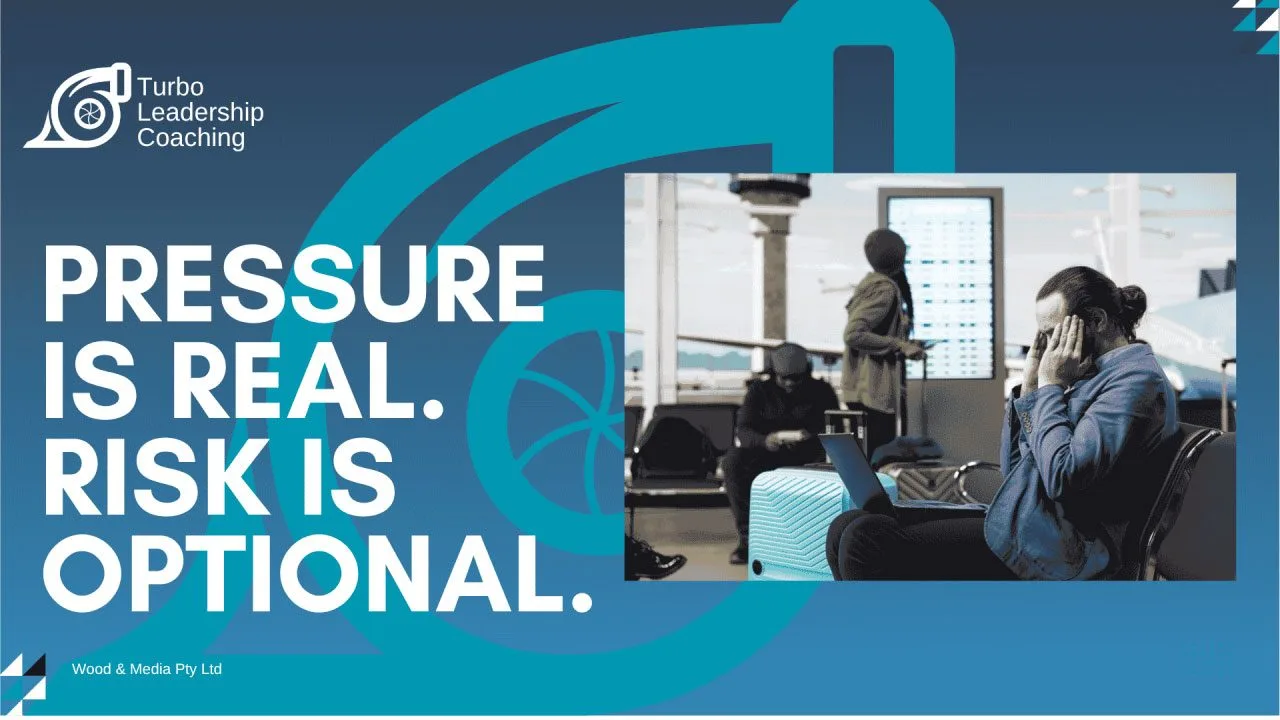
That is the nature of any business and businesses must perform well to make profits and beat their competitors. However, what is not acceptable is allowing that pressure to become a reason to put yourself at risk.
What Often Occurs
Most people hear the words:
“If the job isn’t safe, stop and make it safe.”
But they watch the behaviour of leaders much more closely than they listen to the words.
If leaders consistently celebrate outcomes, deadlines and production while rarely discussing wellbeing at the same time, people start to draw their own conclusions. That is the leadership shadow at work.
Often without even consciously deciding to do it people take the risk or put themselves in harms way to get the job done. The pressure becomes normal and eventually people just believe that it is part of the job and with the best of intentions they put their own wellness secondary to the business needs.
What Leaders Can Do
The best leaders will recognise that the pressure is real and required, but when they communicate the business needs they should always recognise that it does not mean they should put themselves in harms way.
The best leaders openly acknowledge both realities. They talk about the pressure, they talk about the targets, they talk about the expectations, but they also consistently reinforce that none of those things override a person’s responsibility to look after themselves.
The important point is that they don’t wait until after an incident to have that conversation.
In fact, if you’re responsible for production assets, maintenance budgets, shutdowns, or large teams, you should expect pressure, the question is not whether pressure exists and you don’t need to apologise for pressure as it is a reality of business. The question is how you respond to it and manage it.
Making my leaders sign the communication recognising the pressure but also their responsibility to not put this above their own health and safety was one way we were able to demonstrate its significance. Actions speak louder than words so taking some action to embed the right understanding into the culture is essential.
The equipment may need to go back to work as soon as, the client may want the outcomes tomorrow, the operation may want the shutdown completed earlier but none of those realities remove the responsibility to make safe and sensible decisions. In fact, the opposite is true, the greater the pressure, the more important good judgement becomes and the need to ask for help.
The Principle
Pressure is part of business. Looking after yourself is part of being a professional.
Great leaders acknowledge the pressure but they never allow it to become an excuse for unsafe decisions and they create cultures where people feel comfortable speaking up and getting assistance, before pressure turns into a problem.
Take Action
This week, have a conversation with your team about pressure.
Ask them, “What behaviours do you think the business rewards, even if we never explicitly say it?” The answers may reveal messages that your culture is communicating unintentionally.
Then make it clear where the line sits:
But we never expect people to put their wellbeing, health or safety second to achieve them.