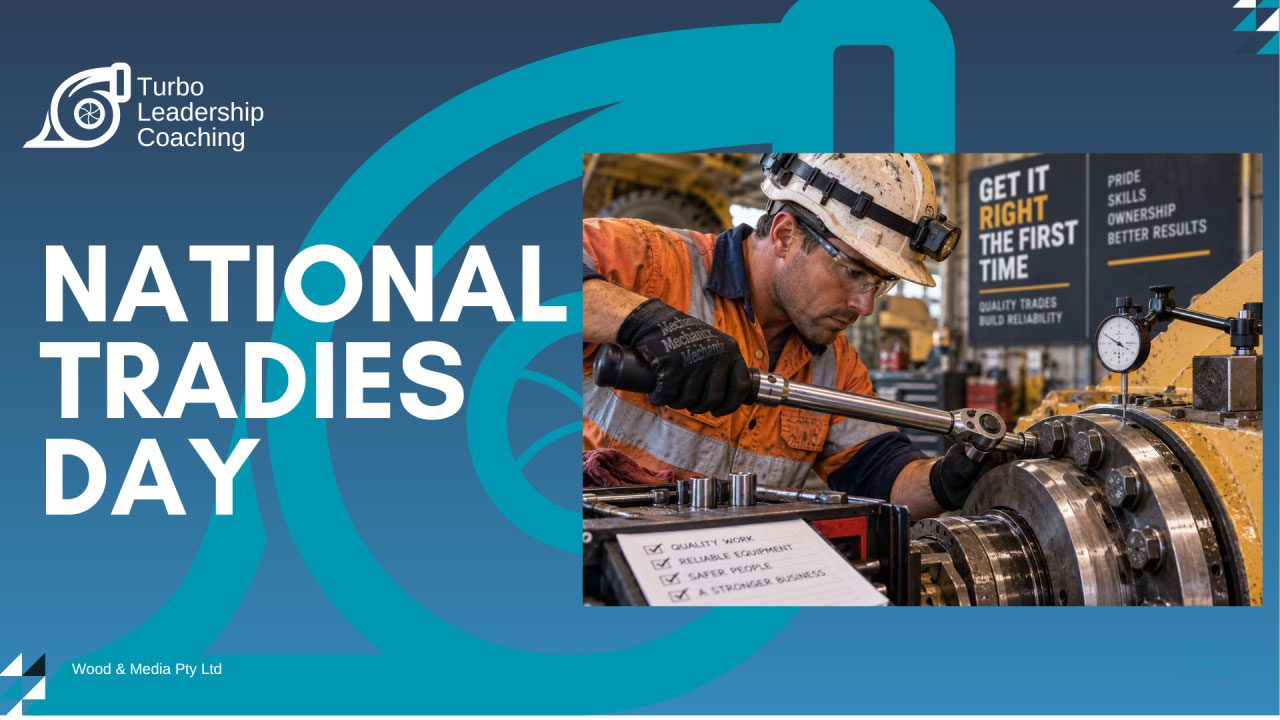

One of the main reasons I wrote Only Tradies Improve Reliability was to raise awareness of just how important our tradespeople are to the performance of our assets. I don’t just mean that businesses need enough tradies, I mean the quality of the work they do matters enormously.
When I was a young tradie, we didn’t have all the reliability systems and technology available today. We didn’t have sophisticated condition monitoring, reliability engineers, enormous amounts of data or advanced maintenance software. The most powerful reliability tool we had was much simpler: Do the job properly the first time.
That was part of the culture. You didn’t want the next person pulling something apart to find something you had done badly and you certainly didn’t want night shift to be woken up for a breakdown caused by your lack of attention. Everyone knew who performed the PM inspections on each area of the machines.
Today, with all the systems and processes we’ve added, I sometimes fear we’ve forgotten just how powerful that simple principle is.
Think about your last few shift-start meetings.
How much of the conversation was about:
Now think about another question:
When was the last time someone talked about the quality of yesterday’s maintenance work?
When did a supervisor last recognise a scheduled job because it was completed exceptionally well? When did they discuss how an upcoming job needed to be performed to achieve the required quality – not just when it needed to be finished? What leaders talk about becomes the important part of the culture. If every conversation is about time, eventually people believe time is what matters most.
When working with maintenance leaders, one of the cultural shifts I keep coming back to is making quality work visible. The economic flow-on from one maintenance task being completed properly is enormous. Imagine a bearing replacement when it is done correctly the first time:
Quality work → Correct installation → Full component life → No repeat failure → No additional downtime → No repeat labour → No additional parts → No production loss.
Now consider the alternative, a small mistake during installation might eventually create:
Poor work → Premature failure → Unscheduled downtime → Troubleshooting → Labour → Replacement parts → Production loss → Possible secondary damage → Another maintenance intervention.
Perhaps worst of all is somebody then investigates the failure without realising that the maintenance itself introduced it. The original difference might have been a few minutes of extra care, the financial difference can be enormous.
This is why I believe quality maintenance execution is one of the most underappreciated business improvement opportunities available to asset-intensive organisations.
Reliability is created one maintenance job at a time.
We can have excellent maintenance strategies, reliability engineers, condition monitoring, planning systems and sophisticated technology. They’re all essential and useful but eventually someone has to put their hands on the equipment. The quality of what happens at that moment matters most. That’s why I called the book Only Tradies Improve Reliability.
It wasn’t to diminish anyone else’s contribution. It was to recognise that ultimately the physical condition of our assets is enormously influenced by the people actually doing the work and we need to make quality workmanship important again.
National Tradies Day is on 18 September 2026. Of course, recognise your tradies and thank them for what they contribute but I’d encourage maintenance leaders to use the day for something more as well.
At your shift-start meeting, ask:
“What does excellent quality maintenance work look like here?”
Talk about a scheduled maintenance task that was recently done exceptionally well. Ask your tradies what gets in the way of doing quality work every time. Then ask your supervisors to start talking about quality as often as they talk about time.
Culture isn’t created by a poster on the workshop wall, it’s created by the conversations we have every day.
We all understand the value of great tradespeople outside work as well. When you finally find a plumber, electrician, mechanic or carpenter who turns up, takes pride in their work and gets the job right the first time, what do you do? You keep their number.
Businesses should value great tradespeople for exactly the same reason.