
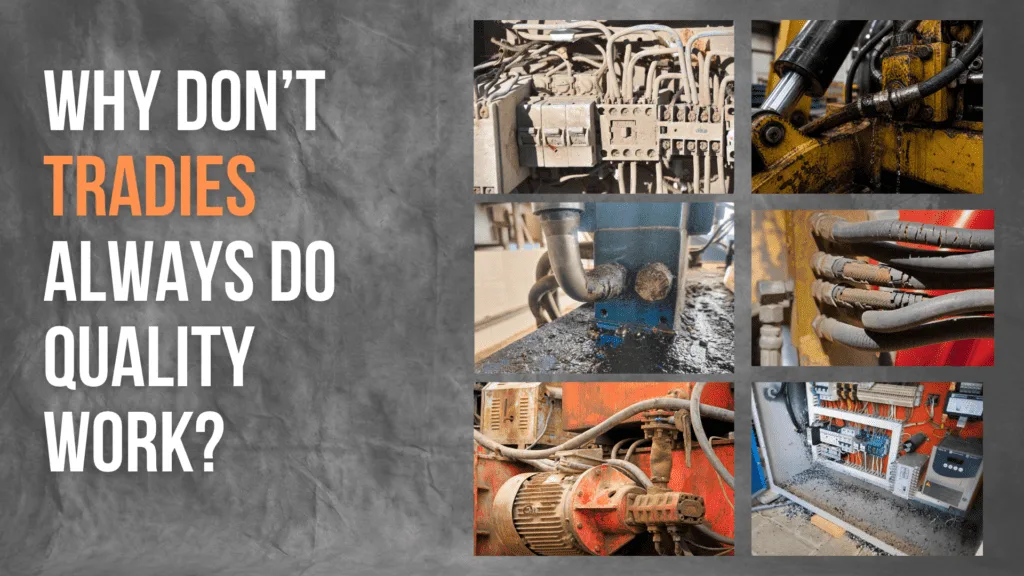
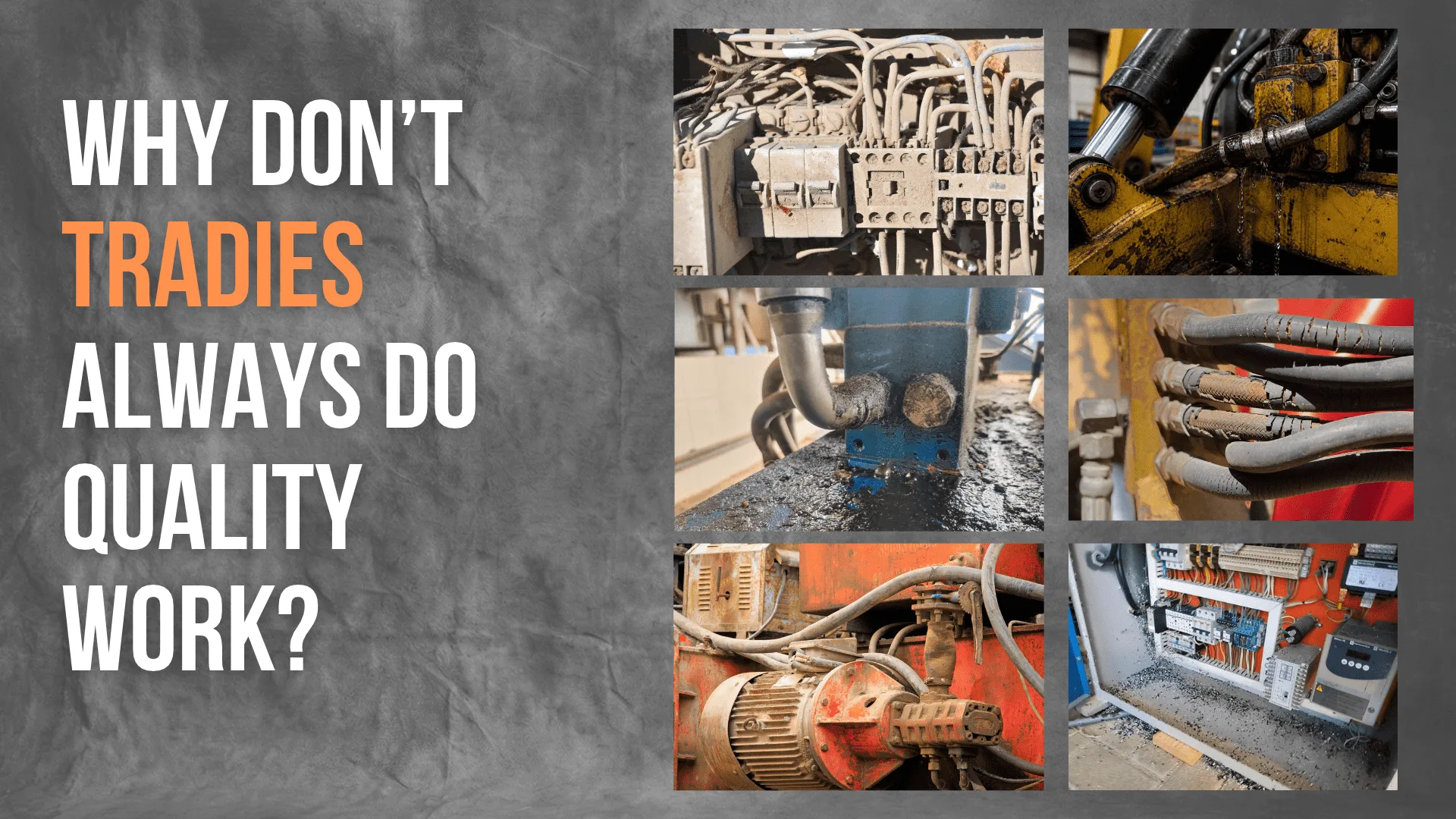
Why Don’t Tradies Always do Good Quality Work?
Understanding why tradies don't always do quality work as the norm.
When I was a young electrician working on draglines, I remember an inspector visiting our site and identifying holes in several electrical cabinets where overload reset buttons had been removed. He insisted that the holes be sealed before the machine could return to work. At the time, I thought he was being unreasonable. Why hold up a machine over a few small holes in an electrical cabinet?
After some time, I realised he was absolutely right. Those holes allowed dust, moisture and other contaminants into electrical equipment. They compromised the integrity of the cabinets and could eventually contribute to failures. The interesting thing is that I knew that. I was an electrician. I understood the importance of protecting electrical equipment.
The problem wasn’t that I didn’t know. I simply didn’t see those holes as an unacceptable condition and that is something I have encountered throughout my maintenance career.
I have walked around sites and seen oil leaks, missing bolts, cracked welds, dirty electrical cabinets, poorly supported hoses and all sorts of conditions that have clearly been there for a long time. People walk past them every day. They know what they’re looking at. They generally care about their work. But somehow these conditions have become accepted as normal.
This was one of the observations that led me to develop the Don’t Know, Don’t Care, Don’t See concept in my book Only Tradies Improve Reliability https://gerardwood.com.au/product/only-tradies-improve-reliability/.
What Happens
When equipment reliability is poor, leaders often assume their tradespeople need more training or simply don’t care enough but I believe there are three reasons why tradies don’t always deliver quality work.
Don’t Know
Sometimes people genuinely don’t know the correct standards or how to perform a task properly. Training, coaching and technical support can address this.
However, in my experience, most qualified tradies already have the knowledge required to prevent many of the common breakdowns we experience.
Don’t Care
There are certainly people who don’t take enough pride in their work, but I believe they are a very small minority. Most tradies want to do a good job.
When they appear not to care, I often find it is because the culture around them doesn’t value quality. Perhaps the only thing anyone talks about is how quickly the job can be finished.
Don’t See
This is the big one. People don’t recognise that a condition or a particular way of doing a job is unacceptable. They have seen it so often that it has become normal or they don’t recognise the connection between the quality of their work today and the breakdown that might occur weeks or months later.
In my experience, Don’t See is the most common of the three and presents the greatest opportunity for reliability improvement.
Make Quality Visible
The solution is surprisingly simple.
Make quality work, and work that doesn’t meet the required standard, visible to everyone.
In Only Tradies Improve Reliability, I describe several practical ways to achieve this. One of the most effective is introducing quality discussions into shift-start meetings.
Think about what normally happens in these meetings. We discuss safety, what broke down yesterday, what work needs to be completed today and when the equipment needs to be returned to operations but when was the last time your team discussed the quality of yesterday’s maintenance work?
I have seen a remarkable change in engagement when supervisors start showing photographs of actual maintenance work and equipment conditions.
Tradies who were previously standing at the back of the meeting suddenly move forward. They want to look at the photos, they want to discuss what they see. After all, this is their trade, and they generally take pride in it.
Here are four simple ways to make quality visible.
1. Show photographs at shift-start meetings
Take photographs of excellent work and examples of work that didn’t meet the required standards. Ask the team what they notice, what the standard should be and how they can prevent similar problems. Don’t use the photos to embarrass people. Use them to create a common understanding of quality.
2. Introduce a quality photo board
Create a visual board in the workshop showing examples of excellent workmanship alongside conditions and practices that need improvement. Keep it current and encourage tradies to contribute their own photos.
3. Make failed parts visible
Keep selected failed components where tradies can inspect them and discuss why they failed. A damaged bearing, failed hydraulic hose or worn coupling can teach more about maintenance quality than another presentation.
4. Recognise excellent work
We spend plenty of time discussing things that go wrong. Why not give the same attention to things that go right?
Recognise a particularly well-executed job, a defect identified early or a tradesperson who took the extra care needed to prevent a future failure. One of the important things I have learnt is that these discussions need to be led by supervisors and superintendents initially but ultimately, the tradies themselves should take ownership. When that happens, quality becomes something the team expects of itself, rather than something management continually has to enforce.
This is one of the cultural changes I focus on when working with maintenance leaders. We are not trying to introduce another complicated reliability program. We are trying to change what people notice, discuss and accept in their everyday work.
The Principle
You cannot improve what your people don’t see as a problem.
If poor-quality work and unacceptable equipment conditions become normal, they will continue to cause breakdowns but when you make quality visible, people start noticing things they previously walked past.
They start discussing standards, they start challenging practices that have become normal and their natural pride in their trade starts driving improvement. This is how you create a culture where quality work becomes the normal way of doing things. Not through more procedures or another reliability initiative but through everyday conversations about the work itself.
Take Action
This week, ask one of your supervisors to bring two photographs to the next shift-start meeting.
One showing an example of excellent quality work. The other showing an equipment condition or maintenance task that didn’t meet the standard.
Spend five minutes discussing them with the team.
Ask:
- What do we see?
- What should the standard be?
- How do we make sure everyone recognises and applies that standard?
Make it a positive discussion about improving together, not finding someone to blame. Then repeat the exercise regularly.
You may be surprised how quickly your tradies become engaged and start identifying things that have been overlooked for years.
Because the first step towards improving reliability is getting everyone to see what good quality really looks like.
Share on:
Facebook
Pinterest
WhatsApp
Recent posts



We recommend